In the footsteps of the glassmaking industry (Weißwasser/O.L., D)

search history - crafts - mobile applications

Popis zážitku

The industry of glassmaking is firmly rooted in the towns, villages and people of this region. Particularly the town of Weißwasser/O.L. is inextricably linked with the tradition of glass production. To this day, the town‘s appearance is characterised by glass factories, glass grinding shops, townhouses and villas from the boom of glass production.

The glass trail will take you through the glassmaking past

However, after the importance of glass production declined and the town was rebuilt, in 1990 there was a risk of the history that gave people pride and prosperity fading away. Today, only Stölzle Lausitz GmbH and Telux GmbH continue the intensive, almost centuryold history of glass production in Weißwasser. Additionally, a series of projects, including a pedestrian glassmaking trail aim to keep this history alive. On this trail, visitors can use a map or an application to explore the town‘s historical glassmaking sites on their own. They are accompanied by famous figures such as Wagenfeld or Neufert. The places where they once created are still surprisingly authentic. The route is constantly expanding, bringing new treasures to light.

Údaje

Lokalita

Německo

Obtížnost terénu

2 / 5

Časová náročnost

3 hod.

years of history of glassmaking
0
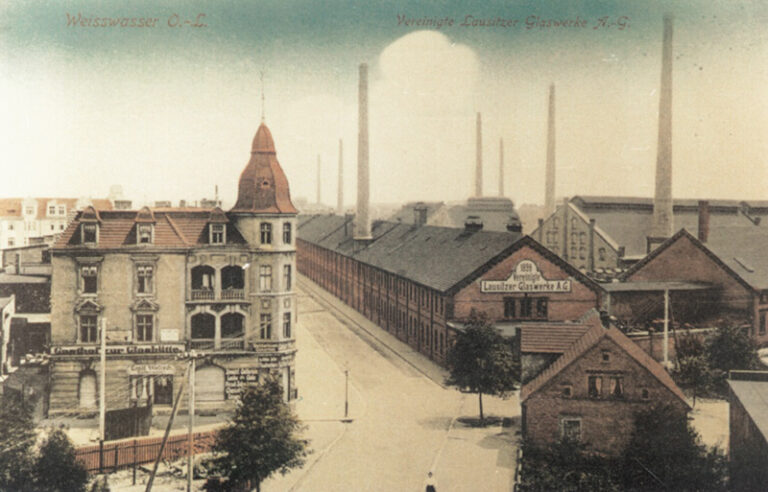
glassworks in the early 20th century
0
glass trail
0
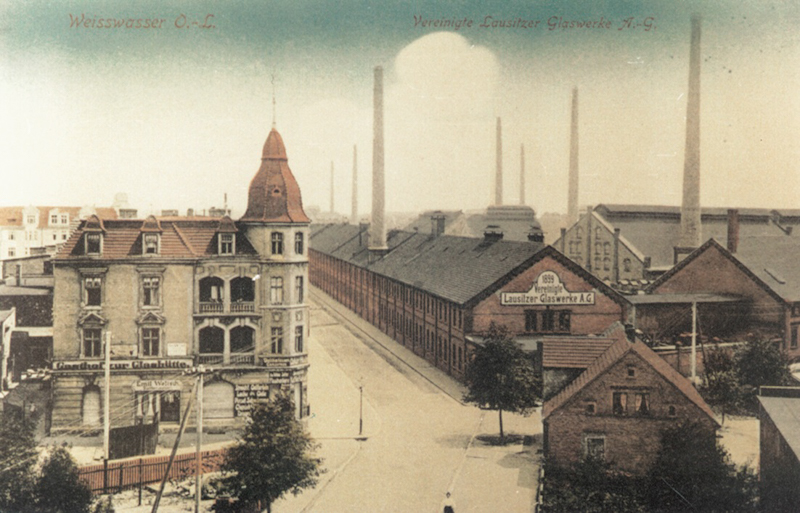
Famous glassmaking past

The glassmaking tradition in Weißwasser / O.L. dates back to 1872/73 and the construction
and opening of the first glassworks. The availability of high-quality raw materials in Muskauer Faltenbogen and the construction of the Berlin-Görlitz railway line, which passed
through Weißwasser, were decisive factors. In the early 20th century, Weißwasser, with
eleven glassworks, had the highest concentration of glassworks in Europe.

1908 - Weißwasser glassworks
1920 - Osramwerk Glassworks
1908 - Workers of the glassworks
Víte že...

In the early 20th century, Weißwasser, with eleven glassworks, had the highest concentration of glassworks in Europe. Approximately 75% of the population was employed in the glassmaking industry. Weißwasser gained great fame when the artistic direction of Vereinigte Lausitzer Glaswerke was taken over in 1935 by Bauhaus representative Wilhelm Wagenfeld. During and after the war, the glassmaking industry was faced with labour shortages and severe damage and disassembly, but was able to regain its reputation.

Praktické informace

The glassmaking trail is most easily accessed by train – just head to Weißwasser/O.L. station. You can also park your car here. From here, follow the boards with a map. You can download a leaflet about the trail at www.muskauer- faltenbogen.de, and it is also available at tourist information centres. An application is being prepared („Uncover – Glas.Geschichte.Weisswasser / O.L.).

Galerie

Objevte další zážitky

Každé místo je unikátní a skrývá mnoho vrstev. Vydejte se s námi do krajiny, kam se vrátila divočina.