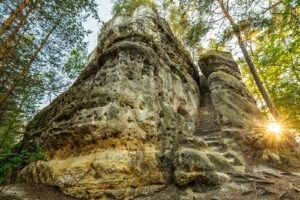


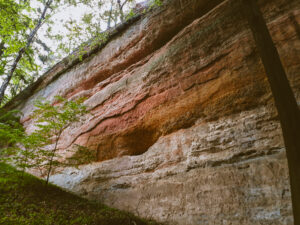
Vranovské skály
A smaller sandstone rock town with interesting formations in the form of rock windows.
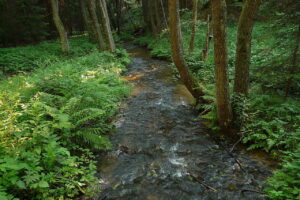
The Zábrdka Valley
The quiet valley of the river hides many secrets – rocks and caves, springs, water mills as well as interesting little rooms carved in stone.
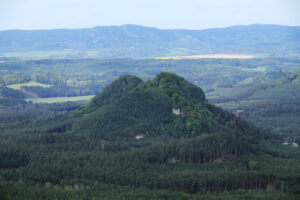
Peak Hamerský Špičák
Charactetistic peak formed on a volcanic vein. Remains of a medieval castle, iron ore mining sites, sandstone quarries.
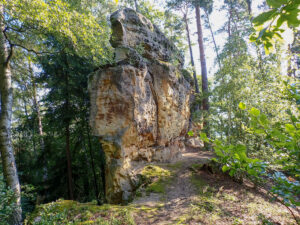
Kozí hřbet
Distinctive ridge with steep slopes, several sandstone rock towers, iron ore mining.
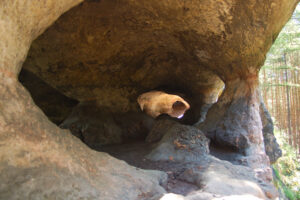
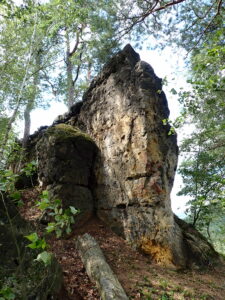
Havířský vrch (peak havířský)
An inconspicuous hill on the shore of Lake Mácha with one of the best preserved iron ore mines in the geopark.
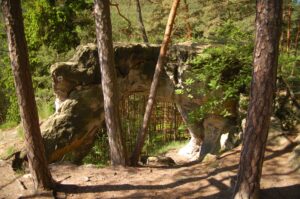
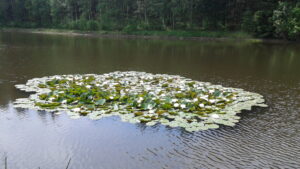
Černý rybní (pond named Black)
Transitional peat bog forming in the overgrown littoral of Černý rybník.
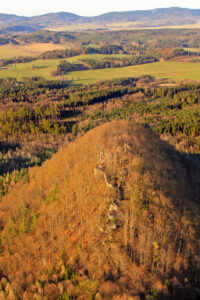
Peak Děvín
A prominent peak with the ruins of Castle Děvín and tunnels as the remnants of the former iron ore business in the area.
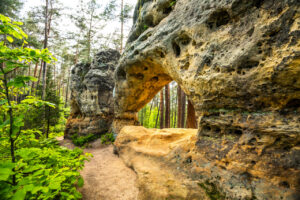
The Rock Theatre
A small sandstone rock formation with a rock gate and examples of sandstone erosion in the form of petrified trees.